
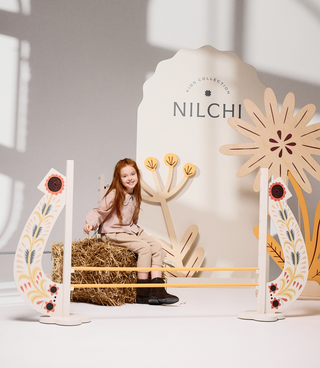
A hobby horse is a toy horse head attached to a stick. Hobby horsing is the wider activity that has grown around it: riders create horse characters, practise movements inspired by equestrian disciplines, jump obstacles and design their own courses. It can be imaginative play, a structured movement session or a social activity with friends.
There is no need to begin with a complete arena or high jumps. A clear area, a hobby horse and one easy task are enough for a first session. Equipment and rules can develop later as the rider discovers which part of the activity is most enjoyable.
What do hobby horse riders do?
The participant holds the hobby horse between their legs and moves along a chosen route. Some riders imitate different horse gaits or practise dressage-inspired patterns. Others prefer a slalom, timed route or jumping course. Creative play can include naming the horse, making stable stories and designing competition cards.
These versions can overlap. A quiet story-based session might end with one low jump, while a course can include a station where the rider remembers a colour or performs a wide turn. There is no single required style of hobby horsing.
What is needed for the first activity?
Begin with:
- a hobby horse that is comfortable to hold;
- a clear, level area with room to stop;
- simple markers for a start and finish;
- one short task that is easy to explain.
Walk the route first without jumping. Remove loose rugs, toys, pots and other trip hazards. Outdoors, check for stones, holes, wet surfaces and low branches. Make sure the finish does not lead towards a wall, fence or another participant.
The first task can be as simple as walking to a marker, making a wide turn and returning to the start. Add a slalom between two lightweight markers once that route feels familiar.
How do hobby horse jumps work?
A jump normally has two supports and a horizontal pole. The rider plans an approach, crosses the pole and continues along the route. One obstacle supports repeated practice, while several can form a course with a defined order.
Adjustable equipment makes it possible to keep the first challenge low and introduce new settings gradually. Nilchi wooden jumps adjust from 20 to 90 cm in 10 cm steps. Their pole rests on magnetic holders and releases when knocked, making it quick to reset.
Height is only one part of the activity. A calm approach, a readable route and a controlled finish are more useful starting goals than a record. See our guide to hobby horse jump height for beginners before raising the pole.
How to create a simple first course
Mark a start and finish with plenty of clear space between them. Place one obstacle on a straight approach and keep the pole at a low, comfortable setting. Walk around the obstacle first, then walk over it and finally try a small jump if the rider is ready.
After landing, continue to the finish rather than stopping beside the structure. This turns the jump into part of a route and encourages control after crossing the pole.
When one obstacle becomes familiar, add a wide turn, a pause station or a second low jump. Change one feature at a time so the route remains easy to understand. Our step-by-step article explains how to build a hobby horse jumping course.
Which accessories are useful?
Accessories can support a favourite style of play, but they are not all required on day one. Common choices include bridles, halters, decorative ear bonnets, grooming props, number cards and storage solutions. Jumping enthusiasts may add adjustable obstacles and personalised panels.
Choose items that have a clear role in the activities the rider already enjoys. A single adjustable jump often offers more variations than several fixed objects, while homemade number cards can refresh a course without taking up storage space.
If you are comparing your first obstacle, use our hobby horse jump buying guide to check size, material, adjustment and pole design.
Ideas that do not require higher jumps
A session can become more challenging without raising the pole. Try:
- completing the route in the opposite direction;
- remembering a short sequence of numbered stations;
- stopping inside a marked area after the jump;
- carrying a ribbon from start to finish;
- designing a course name and sign;
- walking one round and jumping the next;
- creating a story about the horse and the route.
These variations keep imaginative and movement-based play connected. They also make the same equipment useful for participants with different levels of confidence.
How to keep the activity organised
Agree on a waiting point when several people take turns. Only reset a pole after the previous rider has left the route. At the end, count the pieces, check the equipment and return it to a consistent storage place with its instructions.
Hobby horsing can remain a simple home activity or grow into a detailed interest with named horses, handmade accessories and changing courses. The best beginning is deliberately small: one clear route, an achievable task and enough time to repeat it comfortably.
Explore wooden hobby horse jumps by Nilchi when you are ready to add an adjustable obstacle to the play area.